I’m Jane Elliott—wife, teacher, writer, mother, former foster parent, and a woman learning to navigate the beautiful and brutal in-between.
Raised in chaos and shaped by the question, “What would my 40-year-old self say?”—I write to make sense of the past and to carve gentleness into the present.
This blog is part reflection, part becoming—a space for grief, grace, and growth.
One birthday, one breath, one brave word at a time.
I said the words with the sincerity of someone who genuinely believes she can out-negotiate exhaustion.
Apparently, my body had notes.
Yesterday, while doing one of the thousand ordinary things mothers do without ceremony—lifting a child, carrying the weight of someone who trusts you completely—I felt something snap.
Not a dramatic movie moment. No soundtrack. No slow motion.
Just a sudden, brutal message.
Down.
Within hours I could barely function. Getting out of the car felt impossible. Every movement became a negotiation. My body, which I have asked to push through far too much for far too long, stopped negotiating.
It issued terms.
You said we’d rest this summer?
Fine.
We are going down. Like it or not.
Sometimes the body stops negotiating and makes the decision for us.
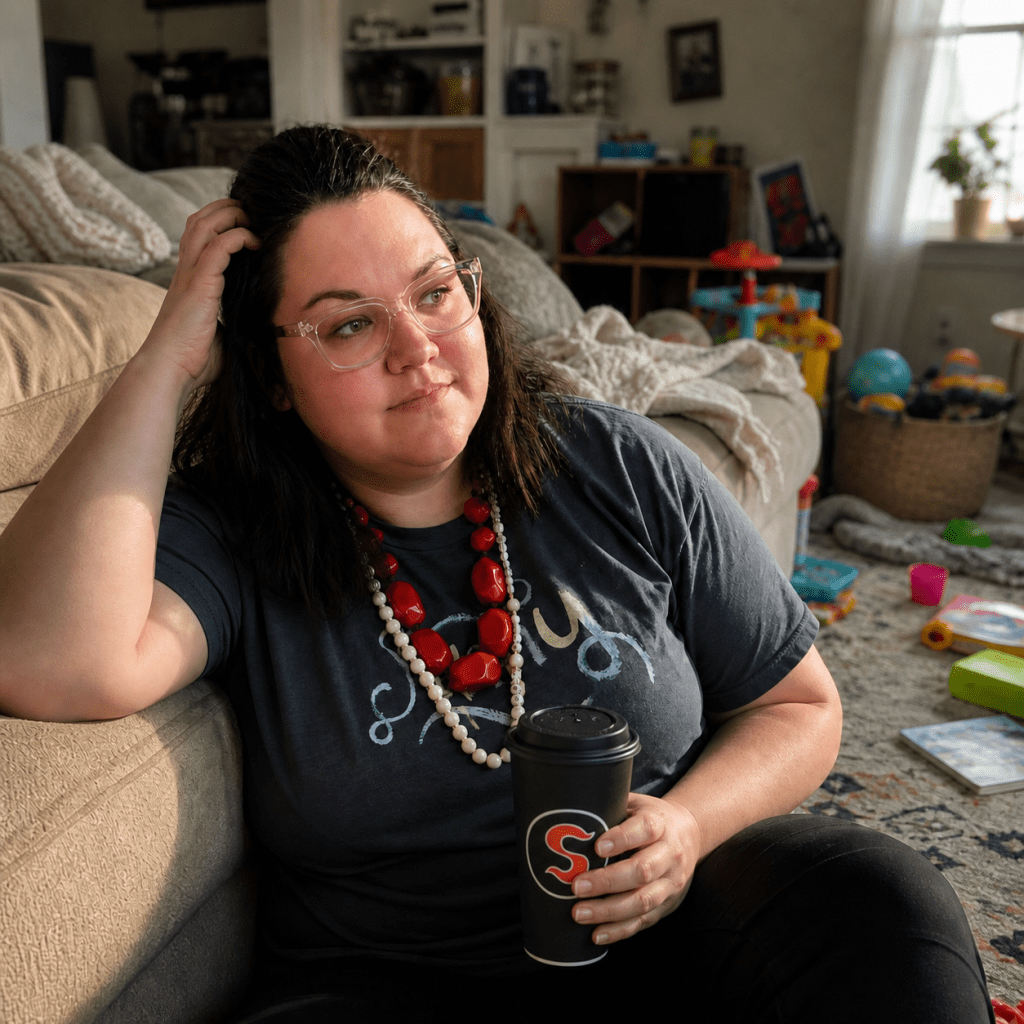
There is a particular irony in being forcibly still when your nervous system is wired to scan for what needs fixing.
The laundry. The dishes. The sticky floor. The appointments. The bottles. The endless invisible labor of mothering and managing and remembering.
Even while hurting, my first instinct was not compassion.
It was calculation.
How quickly can I recover? What can I still get done? How much can I ignore before guilt catches me?
And maybe that’s the deeper injury.
Not the SI joint. Not the inflamed muscles. Not the angry pelvis still carrying the echoes of birth.
Maybe the deeper wound is how difficult it feels to simply stop.
To rest without earning it. To be cared for without apologizing. To leave things undone without mentally carrying them anyway.
This body has carried pregnancies, trauma, surgeries, babies, grief, anxiety, hypervigilance, and the quiet burden of competence.
She has whispered for months.
Slow down. Something isn’t right. Please listen.
I heard her.
I just kept moving.
So she stopped asking nicely.
And maybe that is the lesson.
Sometimes healing doesn’t arrive as a spa day, a retreat, or a beautifully curated morning routine.
Sometimes healing arrives like a collapse.
Sometimes rest is not chosen.
It is enforced.
And perhaps mercy sometimes looks rude.
Perhaps grace sometimes sounds like:
Sit down. Lie down. Stop carrying everything.
I’m walking smoother today.
Not normal. Not healed. Just… less guarded.
Progress, I suppose.
The house is still a wreck.
The laundry still waits.
The world, annoyingly, continues turning.
And maybe that is its own medicine.
Everything does not fall apart when I stop.
So today, I’m practicing something unnatural.
I’m letting the house be messy. I’m letting recovery be unproductive. I’m letting rest count as work.
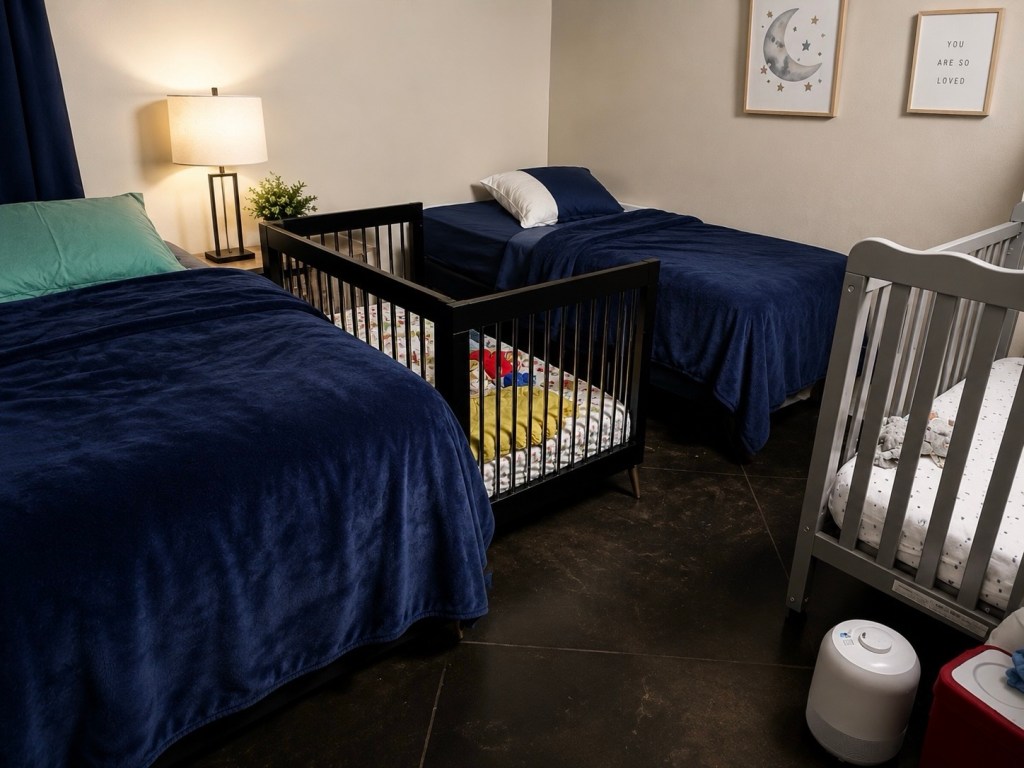
Toddler got upgraded to a toddler bed. Baby got upgraded from the mini crib to a full crib.
Is it traditional? Nope.
But neither is sprinting through the house half asleep while tiny people roam the halls at 2am.
Families have slept communally for most of human history. Modern American “every child alone in a themed room” culture is actually the newer thing. Somewhere along the way, I stopped trying to force what looked right and started paying attention to what actually worked for our family.
And honestly? This setup reduces dysregulation, wandering, nighttime overwhelm, and probably everyone’s cortisol levels too. 😂
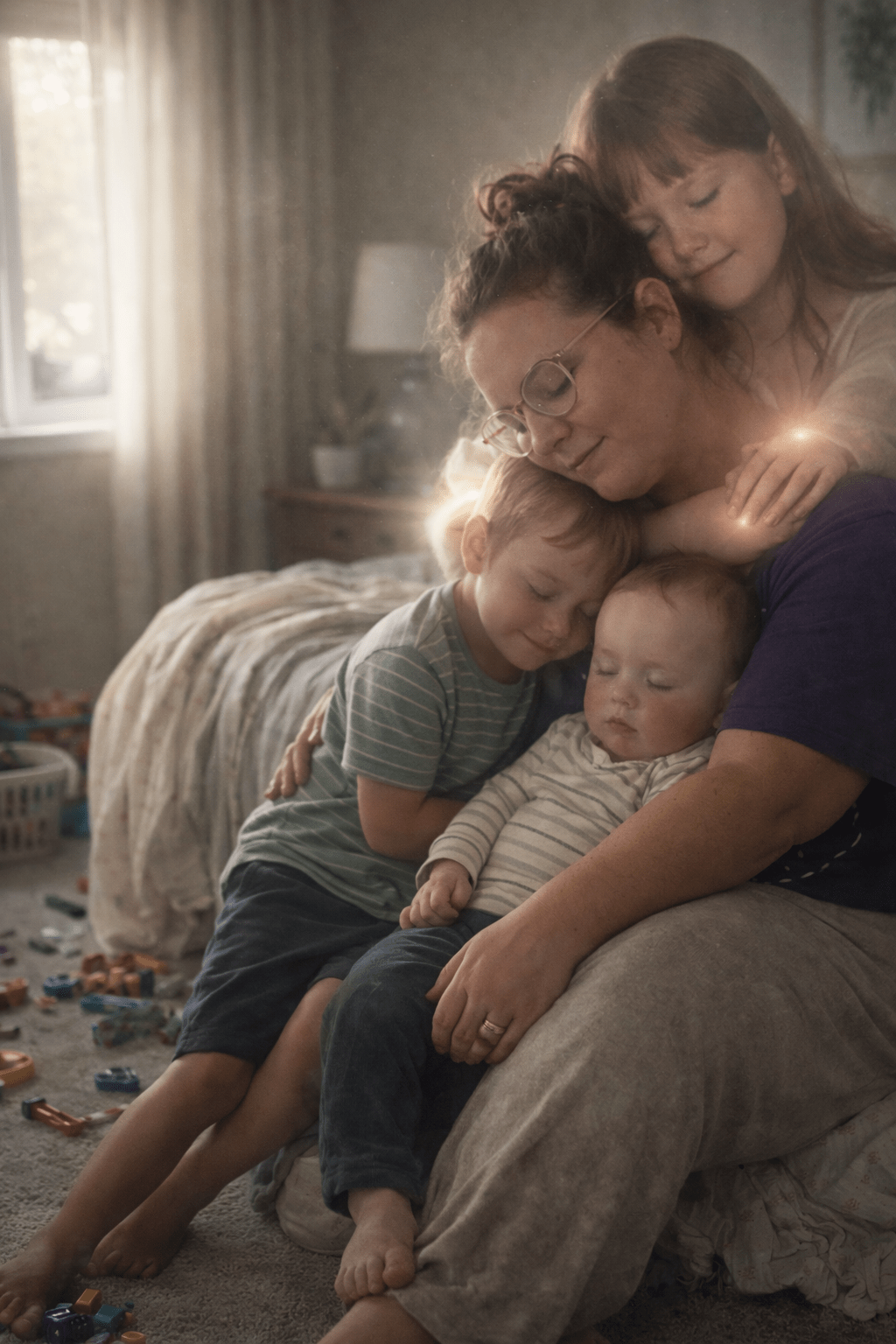
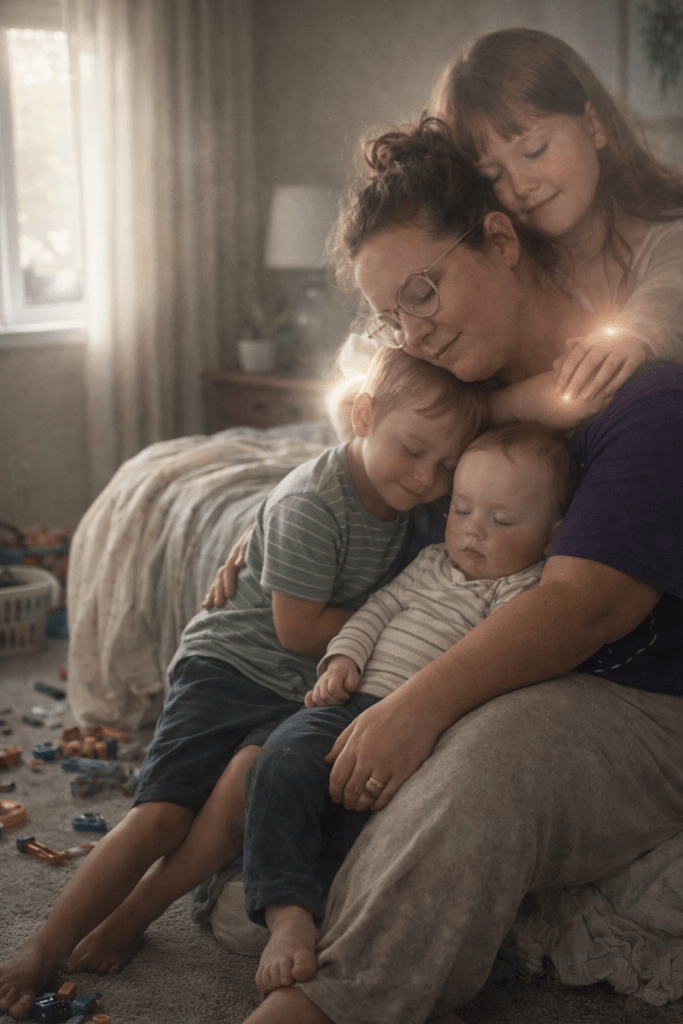
This season of parenting may not photograph like a magazine spread, but everyone is safe. Everyone is close. Everyone sleeps better.
And after enough survival-mode nights, that starts to feel a whole lot like success. 🤍
I remember the moment like it branded itself into me.
I was a preteen, standing in the middle of an argument with my birth mom. Words were flying—sharp, careless, heated. And then she said it.
“I would have had an abortion… but I didn’t have the money.”
About me.
My life.
Time didn’t just slow—it split.
At that age, I was firm in what I believed. Pro-life, no exceptions. So in my mind, it wasn’t just rejection—it was something deeper. It felt like I was hearing, You were almost erased… and not even worth the cost.
I fired back quickly, loudly—
“Then you should have given me up for adoption… or left me in foster care!”
Bold. Confident. Sharp.
But inside?
A little girl collapsed.
Because what I was really saying was,
My feelings are real. My momma doesn’t want me… and never has.
Maybe it was said in anger.
Maybe it was just a moment.
But repair never came.
And years have a way of telling the truth
that apologies never did.
We are estranged now.
And for my peace—I’ve made room for that.
But the truth is…
you don’t just walk away from something like that untouched.
I have walked this life as an unchosen child.
For nearly forty years.
And then—
God did something I never saw coming.
He rewrote the narrative without erasing the past.
He chose me.
Not in a loud, performative way.
Not in a way that demanded perfection.
Because God already knew.
He knew I would get overstimulated, overwhelmed,
and lose my patience sometimes.
He knew I would make mistakes
and doubt myself.
He knew I would worry—
feel stretched thin trying to hold it all together
and figure it all out.
And still…
He said,
I choose her.
He intentionally entrusted me
to be their mom.
Through a husband who chose me—
through the messy, stretching, unraveling seasons of
postpartum,
perimenopause,
ADHD overstimulation,
and the raw weight of motherhood.
Through two little boys
who don’t question if I belong to them.
Who reach for me
like it was always meant to be this way.
And maybe… just maybe…
this is what healing looks like.
Not pretending you were always chosen.
Not rewriting the story to make it prettier.
Motherhood didn’t make me chosen—it just made it impossible to ignore.
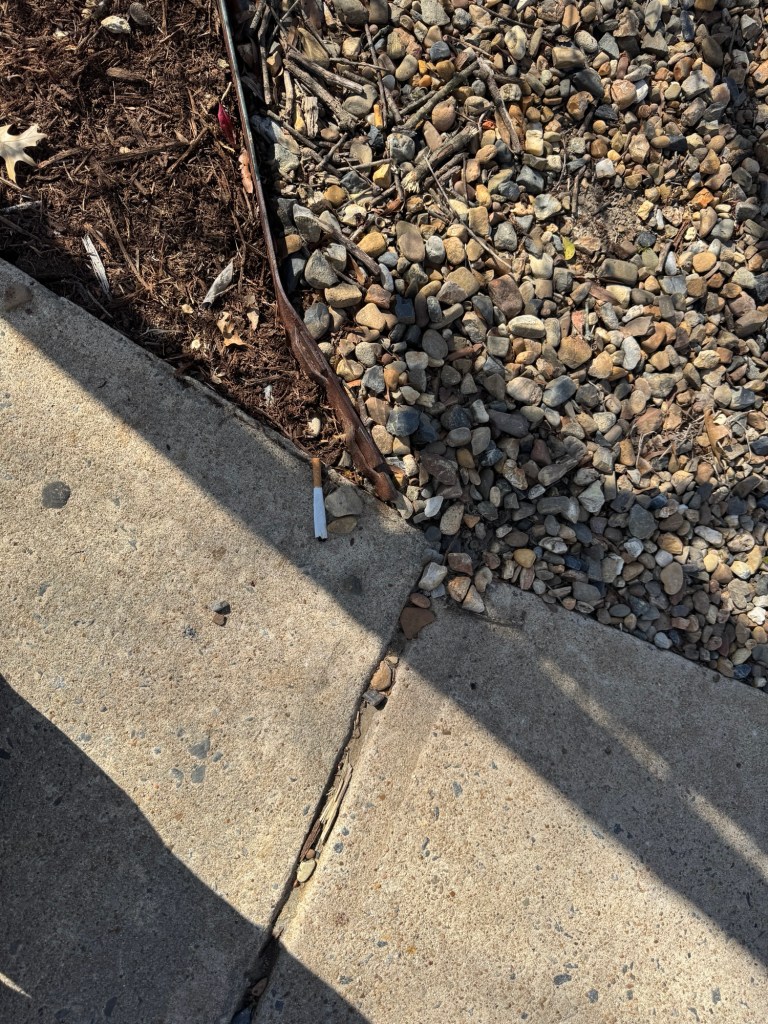
I saw a cigarette butt on the ground today. As I do many times in public….
Not just saw it— locked onto it. As I do everytime.
The filter still clean. The paper barely burned down. A “good one.”
And before I could even think, my brain did what it was trained to do:
That’s going to waste.
⸻
It’s strange, the things your body remembers before your mind has a chance to catch up.
Because this isn’t about cigarettes. It never was.
It’s about being taught—quietly, indirectly—that nothing could be wasted. That value lived in what other people threw away. That there were ways to make something out of almost nothing… if you just paid attention.
So we walked.
And I scanned the ground.
Not as a game. Not as a quirky childhood memory. But as something that felt… important.
Useful.
Like I was helping.
⸻
No one explained the full picture to me then.
No one said, “We’re doing this because addiction is expensive.” No one said, “You’re being pulled into something you don’t have the language to understand.”
They just taught me what to look for.
And I learned.
Because that’s what children do— they adapt to the world they’re given, and they get very, very good at it.
⸻
What I didn’t know is that learning doesn’t stay contained to the moment.
It seeps.
It becomes instinct.
It lives in your eyes— the way they scan without asking permission.
It lives in your thoughts— the split-second calculations about usefulness, value, waste.
It lives in your nervous system— the quiet sense that you should always be looking, always noticing, always making sure nothing is slipping through the cracks.
⸻
So now, years later, I can be standing in a completely different life— a safe one, a stable one, a life I built on purpose—
and still feel that old wiring flicker on.
That’s usable. That shouldn’t be wasted.
And almost immediately, another voice answers back:
We don’t need that anymore.
⸻
That moment—right there in between those two thoughts— that’s where healing lives.
Not in pretending the first thought doesn’t happen.
But in recognizing it for what it is:
a learned response from a version of me who was doing the best she could in an environment that asked her to grow up too fast.
⸻
There’s grief in that.
Grief for the child who didn’t get to just walk. Who didn’t get to look at the world without scanning it for survival.
Grief for the normalization of things that should have never been normal.
Because let’s say it plainly:
Children are not supposed to be taught to search for cigarette butts.
They’re supposed to be looking at bugs on the sidewalk. Cracks in the pavement. Cloud shapes. Anything but this.
⸻
And yet—
there’s also something else here.
Something complicated.
Because that child learned to notice.
She learned to read a room. To find value where others didn’t. To stay alert. To contribute in the only ways she knew how.
Those skills didn’t disappear.
They just had to be… reclaimed.
Refined.
Redirected.
⸻
Now, I still notice things other people don’t.
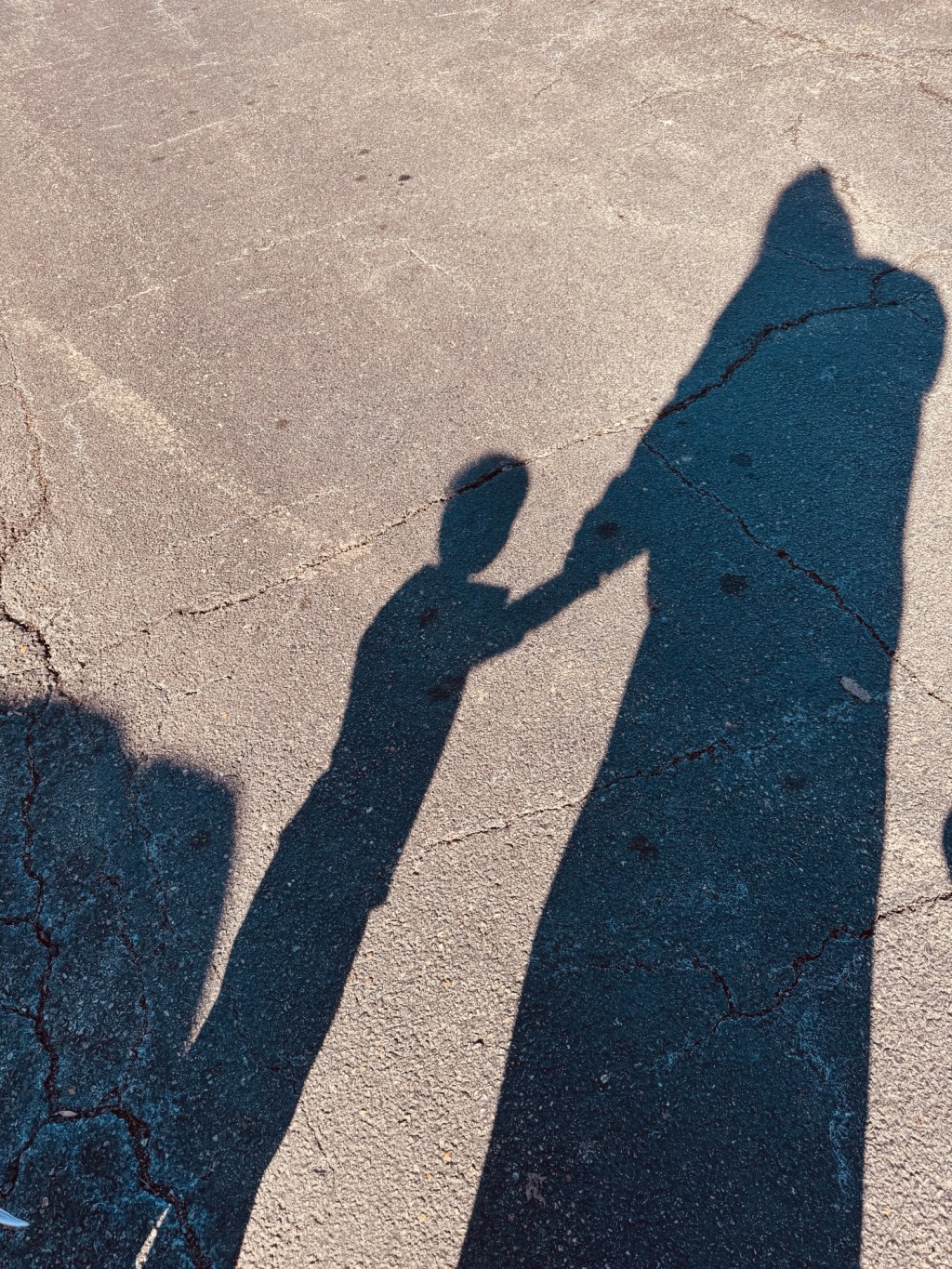
But instead of scanning for survival, I notice my children’s faces.
The way they reach for me without hesitation. The way they trust that their needs will be met without them having to search the ground for it.
And that difference— that quiet, almost invisible shift—
is the kind of generational change you can’t always photograph.
But you can feel it.
⸻
I didn’t pick up the cigarette.
I didn’t need to.
I just stood there for a second, noticing the thought, and then letting it pass.
And maybe that doesn’t sound like much.
But when you come from a place where your instincts were built around survival—
choosing not to act on them is a kind of freedom that’s hard to explain.
⸻
My children will walk beside me, not because they’re looking for something we need—
As spring break began, we went against every instinct I have as a mother.
We let my child be exposed to peanuts.
On purpose.
In a clinic.
With a team watching closely.
This is part of a clinical study designed to better understand and treat peanut allergies in a controlled setting.
I understood the why.
I trusted the process.
But it still felt like I was walking him toward the very thing I’ve spent his whole life protecting him from.
For his entire life, I’ve read labels like they were contracts.
Double-checked everything.
Carried the quiet awareness that something so small could cause something so big.
Avoidance became love in action.
So what do you do when love asks you to do the opposite?
You show up anyway.
You sit beside your child.
And you try to make something heavy feel light.
At one point, they wrapped him in a burrito to draw blood.
A sheet pulled snug around him—his little body the “tortilla.”
I joked, trying to keep it light.
Don’t be a chicken burrito—be a tough beef burrito.
Then I reframed it—because words matter.
A brave burrito.
And I told him gently
that even brave burritos cry when something hurts.
He trusted me.
In a place that didn’t feel natural.
In a process he didn’t understand.
And then, quietly, his body responded.
Not dramatically.
Not urgently.
Just subtle.
Easy to question. Easy to second guess.
And maybe that’s part of what led us here.
Part of why we chose to do this study was to better understand what a reaction actually looks like in a controlled setting.
Not just for answers—but for validation.
He had the equivalent of one peanut.
We’re told thresholds can vary from day to day.
What is tolerated once may not be tolerated the next.
He made it to about half a peanut before his body responded.
And on a different day, under different circumstances,
even a trace amount—something as small as cross-contamination—could cause a reaction.
Because from the beginning, his symptoms have often been brushed off.
Without wheezing, it was easy for others to question it.
At one point, a paramedic reassured me it was most likely viral.
And maybe that’s part of this story too—
learning to trust what I was seeing,
even when it wasn’t obvious to everyone else.
Because here’s what no one tells you—what this experience taught us:
Allergic reactions don’t always look dramatic.
Sometimes they whisper.
And the hardest part isn’t always the reaction.
It’s the decision.
The moment where you have to choose—
in real time—
whether to trust what you’re seeing
or talk yourself out of it.
What surprised me most wasn’t what happened.
It was what didn’t.
No chaos.
No overwhelming panic.
Just something small
that mattered anyway.
A well-managed allergic reaction can look incredibly calm.
Because as a mom, you think:
If it’s serious, I’ll know.
But sometimes it’s:
If I’m paying attention, I’ll catch it before it becomes serious.
And maybe that’s the shift.
Not waiting for it to look dramatic.
Not waiting for certainty.
But learning to trust the quiet knowing.
I paid attention.
I trusted my instincts.
I didn’t cause this.
I didn’t fail him.
I showed up in a space that felt completely backwards
and still did the most instinctual thing of all:
I paid attention.
We don’t know exactly what the next step will look like.
But we rest in what we do know.
We’ll go back next week and do it again.
Another day. Another round—peanut or placebo.
And that afternoon, we’ll place our first patch, not knowing if it holds peanut or not.
Completely blind.
Still moving forward.
As superhero fans, we always joke that superheroes avoid research centers…
But research isn’t the part of the story anyone celebrates.
It isn’t glamorous.
It isn’t fun.
And in the moment, it doesn’t feel redeeming.
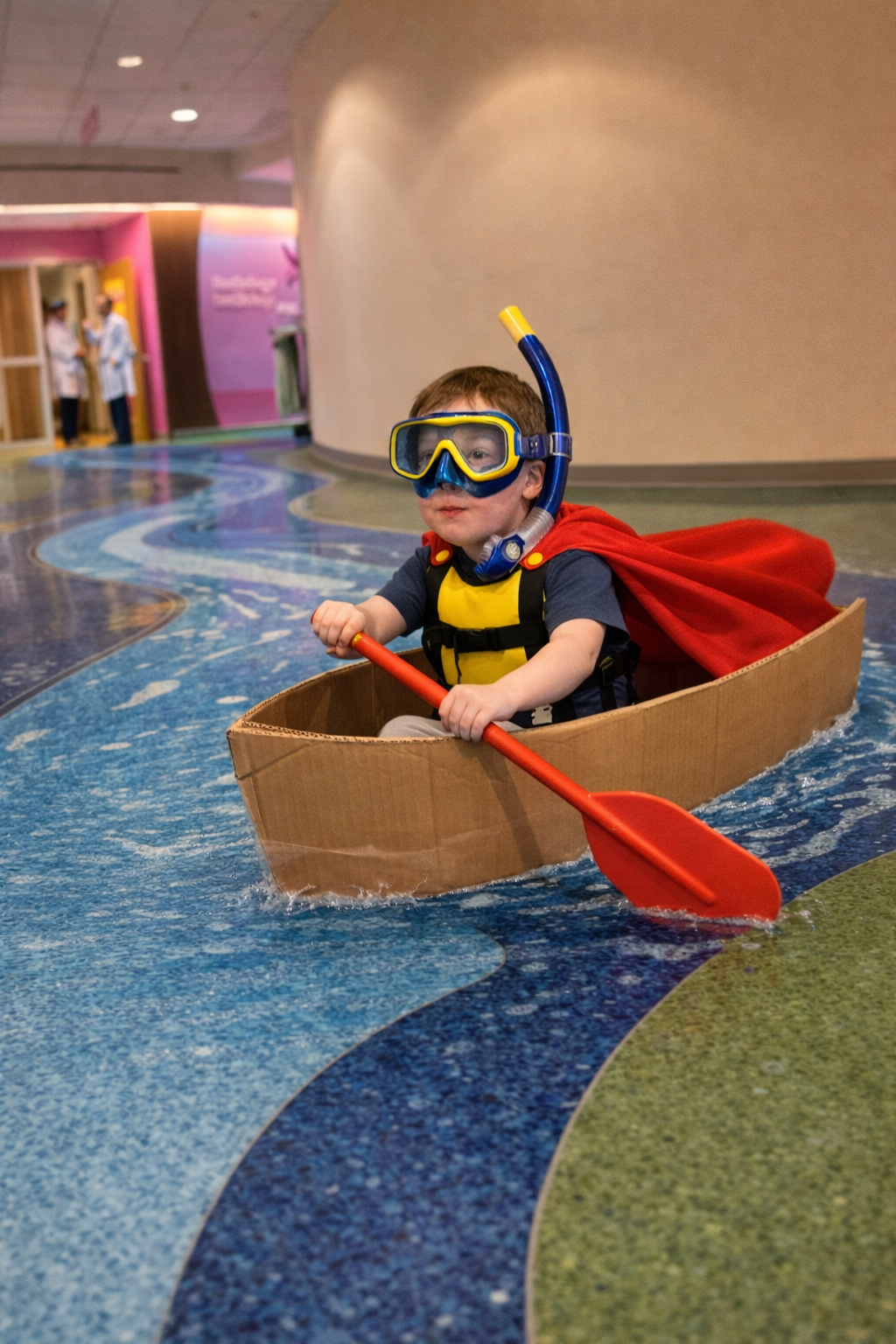
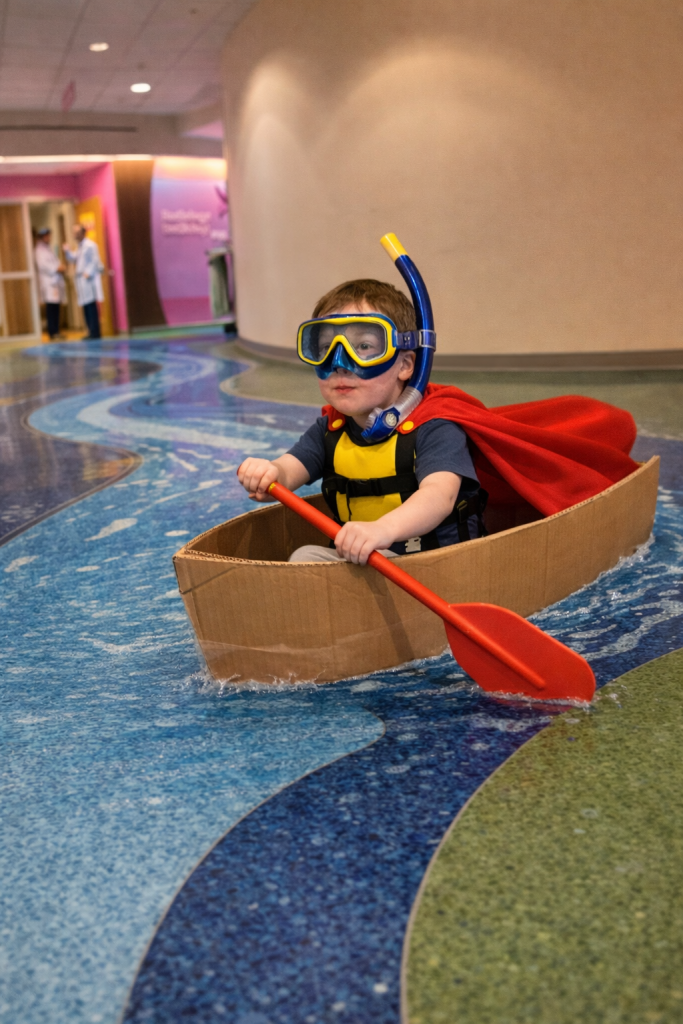
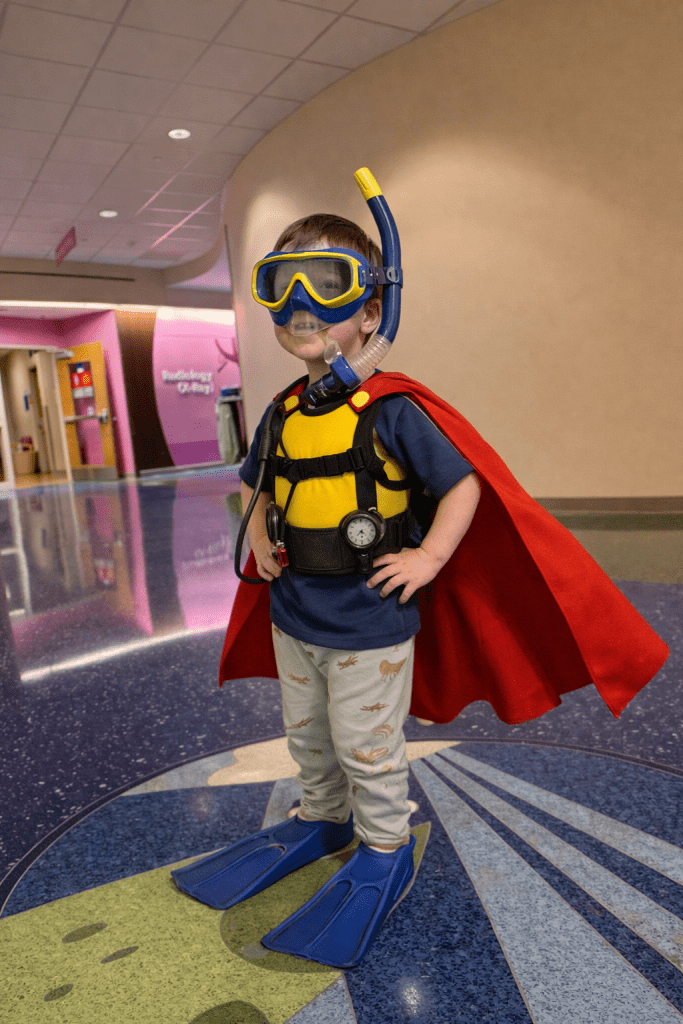
And still, my boy is a superhero.
On the way to the research center, the floor becomes a river. And for a moment, he’s not a patient—he’s just a little boy swimming through it. Cape on. Goggles down. Brave in ways most people will never see.
Fighting quiet battles no one else can see.
Changing the world—one test, one procedure, and soon, one patch at a time.
Because sometimes the real bravery isn’t avoiding the danger—
it’s walking into it together, hope in one hand and fear in the other.
Sometimes instincts are as subtle as the signs before us—
a quiet reminder to pay attention, even to the ones that don’t feel urgent.
I had more caffeine than ever before. Caffeinated, not cracked out. And for a brief, unfiltered moment, I thought, I get it.
I could use some drugs right about now too.
Not serious. Not even close. Not approval. Not permission. A mockery, almost.
Because how do you fall apart to that and add that level of chaos to children who are already at their capacity too?
We were in Arkansas Children’s Hospital again. The same hum. The same quiet, clinical tension that settles into your chest before anyone even says a word.
And then—the Ronald McDonald House.
Just a glimpse.
And something in me shifted.
No clear flashback. No vivid memory. Just a knowing.
I’ve been here before.
My baby sister. Open heart surgery.
And me—a child—standing in the beginning days of my birth mother’s addiction.
There’s a kind of stress that lives in places like that. The kind that doesn’t ask if you’re ready. The kind that doesn’t care how old you are.
The kind where you quietly learn to hold it together because someone has to.
That day in the hospital room, I realized something else.
I played with my son the same way I once played with my sister thirty years ago. Distracting from procedures. Turning clinical words into something softer, safer. Making it feel like a game when it wasn’t one.
It should have been my first time mothering through hospital complexities.
But it wasn’t.
I had done this before.
With my sister—just three years younger than me. I was the one who comforted her, held her through tears, distracted her, made sure she felt safe.
It was me.
A child turned mother long before her time.
So of course my body remembered. Of course it knew what to do when it was truly my turn—my responsibility.
What I didn’t expect was how quickly the past would sit down beside the present.
Not loud. Not overwhelming.
Just… there.
Layered in.
The child I was and the mother I am standing in the same space at the same time.
And in that overlap, something in me steadied.
Because this time, I wasn’t the one hoping someone would hold it together.
I was the one who could.
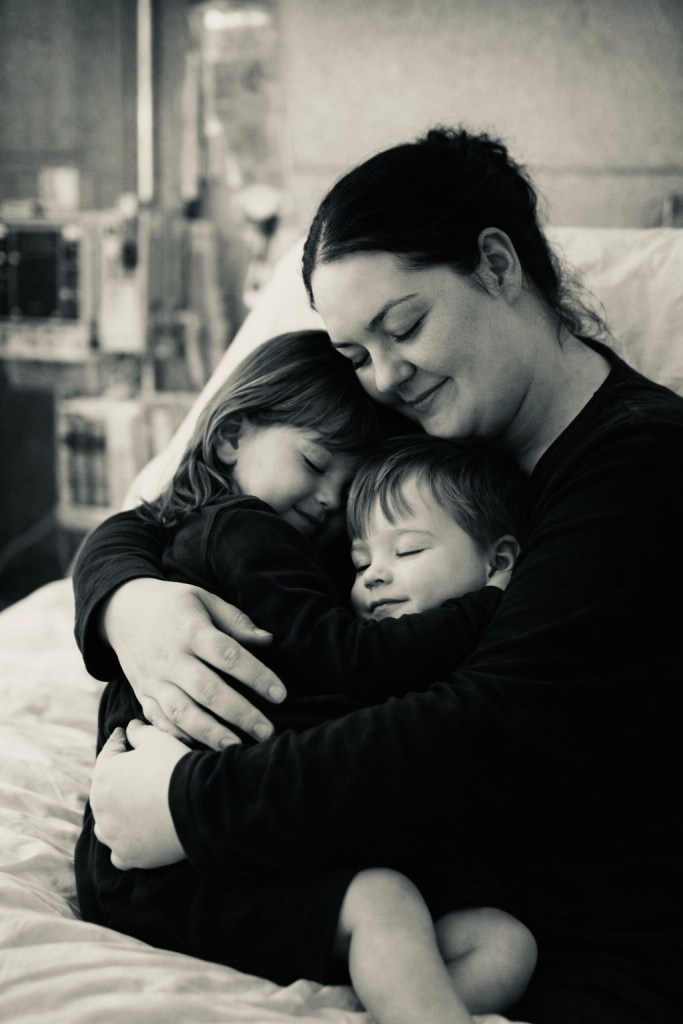
As I comforted my son, I realized I was parenting two children in that moment—him, and the motherly child within me.
Me-Myself-My Son
That wasn’t yours to carry.
I’m sorry that was placed on you when you were just a child.
You did so good.
Your 40 year old self is so proud of you.
And thank you—for preparing us for this. For here. For now.
Because my children—the ones we dreamt of protecting and providing for, the ones who first inspired us to break generational cycles before it was ever our job—benefit greatly from the care you gave then, as I reshape it, remodel it, and fit it to meet their needs now.
I heard myself say, It’s just one moment. It’s just one day. It will get better.
To him. To the room. To myself.
And with that clarity came something heavier.
The disgust. The distaste.
For a birth mother who chose herself—her comfort, her capacity—over the children who didn’t have a choice at all.
Because now I can see it. I can feel the pressure. The overwhelm. The edge of this is too much.
I can understand how someone gets there.
And still—I cannot fathom the choices she made.
I can see the path.
I just didn’t take it.
Yesterday, I was stretched. Overstimulated. Overcaffeinated. Holding more than felt reasonable.
And still—I chose him.
Every time.
I translated fear into play. I turned language into comfort. I held the line.
Because I remember what it felt like to be the child in that space, absorbing everything with no control over any of it.
Understanding how doesn’t require accepting what.
I understand the weight now.
I just don’t understand leaving it on a child.
My baby boy cried for me as I stood beside him, able to comfort him.
In the same way I once cried. My sister cried out for our mother.
The difference is she was checked out.
She chose herself—her needs, her preferences—then, and she still does.
On marriage, illness, and learning to love without control.
In my best Paul Revere voice, I whisper it to myself.
Treatment is coming….
Treatment is coming….
Another day. Another season of stiff body, clenched jaw, guarded steps. Another season of watching the man I love move like every muscle is negotiating its own surrender.
I opened our home to family during the roughest stretch. Not because we are incapable. Not because we are dramatic. But because sometimes love needs witnesses. Sometimes you need other eyes to confirm what you are seeing.
His body is failing him in small, stubborn ways. He hobbles from room to room. He winces. He steadies himself on countertops. Everyone in the house walks on invisible eggshells, not sure when he will fall. Not if. When.
And still, he refuses to rest.
He says he wants to help.
He says he does not want to abandon me.
But he does not see that watching him push past obvious pain feels like abandonment too.
There is a particular heartbreak in loving someone who will not let you love them back.
He serves me the only way he knows how. Laundry. Dishes. Floors. Tangible evidence of devotion. Wet dishes in the sink have become a love language in this house. Many women would say I should be grateful. Many would say they would give anything for a husband who labors.
And I am grateful.
But gratitude does not erase grief.
In sickness and in health, I vowed. I thought that meant I would care for him when he had the flu until we were old and grey.
I did not realize it would mean watching him refuse weakness altogether.
Loving someone through illness is not just about bandages and soup. It is about surrendering control of outcomes. It is about sitting with the helplessness of knowing rest could help, yet being unable to make him choose it. It is about loving him as he is, not as I wish he would be.
His OCD meets my ADHD in the middle of illness and chaos. He needs things finished, closed, exact. I live in half-done piles and creative survival. The laundry may be washed and folded but rarely put away. The dishes may be rinsed but not stacked with precision. It is not his way.
But it could be enough.
If he would just sit down.
If he would trust that I can hold the house together imperfectly while he heals.
Treatment is coming. That is what we keep saying. It promises relief. It promises possibility. It whispers of a future where his body softens and the tension leaves his shoulders.
But hope has weight when you have carried it for too long.
What if not this time.
That fear lives quietly under my ribs. Not loud enough to drown faith. Just steady enough to make it tremble.
I am learning that loving someone through illness is not dramatic or cinematic. It is ordinary and relentless. It is surrendering the illusion that if you pray hard enough, manage tightly enough, or serve fiercely enough, you can secure the ending you want.
It is asking God to make you new too.
Not stronger. Not tougher. Not more patient.
Just new.
Treatment is coming. That is what we tell each other when the nights feel long and the house feels heavy. It is not denial. It is not blind optimism. It is the thin thread of hope we keep choosing to hold.
I do not know what this treatment will change. I do not know how much relief it will bring or how long it will last. I only know that in sickness and in health was never about guarantees. It was about staying.
So I will stay.
I will fold the laundry imperfectly.
I will leave the dishes where they land.
I will ask him to sit down again tomorrow.
I will keep loving him in ways that feel unfinished and human and real.




 Finding Forty